
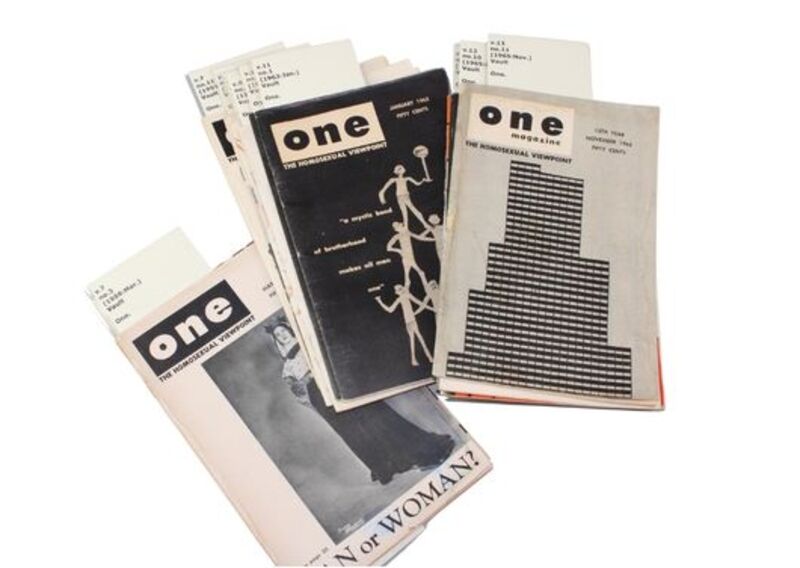
One Magazine
Multiple Authors, Selected Copies from 1959-1965.
Published between 1953 and 1967, ONE magazine was created by ONE Inc., which was founded in 1952 with the aim to “publish the nation’s first wide-circulated, national homosexual periodical.” It was wracked with legal troubles for much of its life, with the US Post Office Department declaring it “obscene” and refusing to deliver it in October 1954. It similarly faced efforts by police to restrict its publication. ONE brought a lawsuit to federal court, which it lost in 1957 in ONE, inc v. Olesen, before the US Supreme Court reversed the lower court’s decision in 1958, creating a landmark case protecting free speech related to homosexuality. While ONE magazine ceased publication in 1967, the organization continues today as the ONE Archives Foundation, and is the oldest continuous gay organization in the United States.
The Ladder
Multiple, 1956-1972
The Ladder was the first nationally distributed lesbian publication in the United States. It was published from 1956 to 1972 by the Daughters of Bilitis (DOB) as their primary monthly publication and communication method. The DOB was formed in 1955 as the first lesbian political and civil rights organization in the United States. The Ladder provides a valuable insight into lesbian organizing and community around the time of the Homophile movement, which is generally considered to have started in 1940 with the founding of the Mattachine Society, which advocated for gay rights. The DOB initially promoted an assimilationist approach, discouraging butches and women “acting mannish,” while later the organization became split between advocates for feminism and political action, and the older, more conservative flank. This split was ultimately a large contributing factor in the collapse of the DOB.
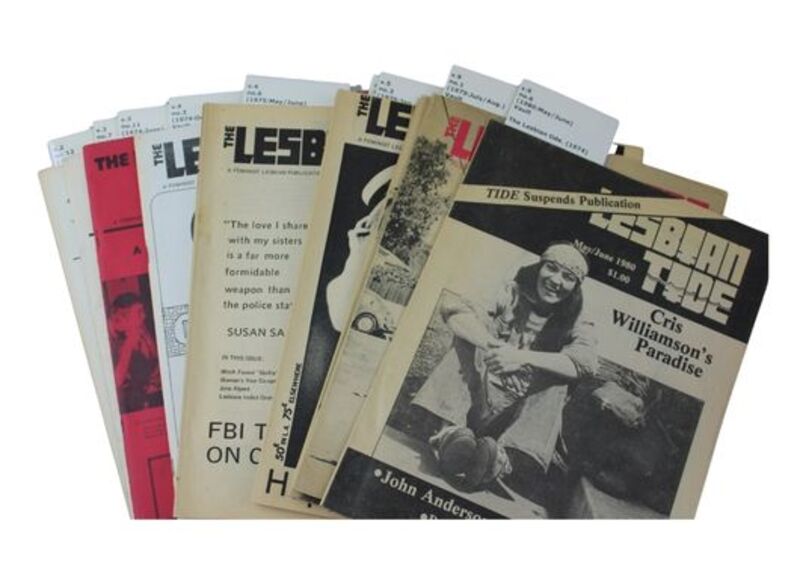
The Lesbian Tide
Multiple Authors, Selected Copies from 1973-1980.
The Lesbian Tide was first nationally reaching publication to include “Lesbian” in the title, and was first published as a newsletter for the LA Chapter of the Daughters of Bilitis (DOB) in 1971, before a younger, more radical group split from the DOB and began publishing it under the name “The Lesbian Tide.” The magazine covered a wide range of political topics, having intersections with Black Power and being called the “newspaper of record for the lesbian feminist decade” by Marc Stein.
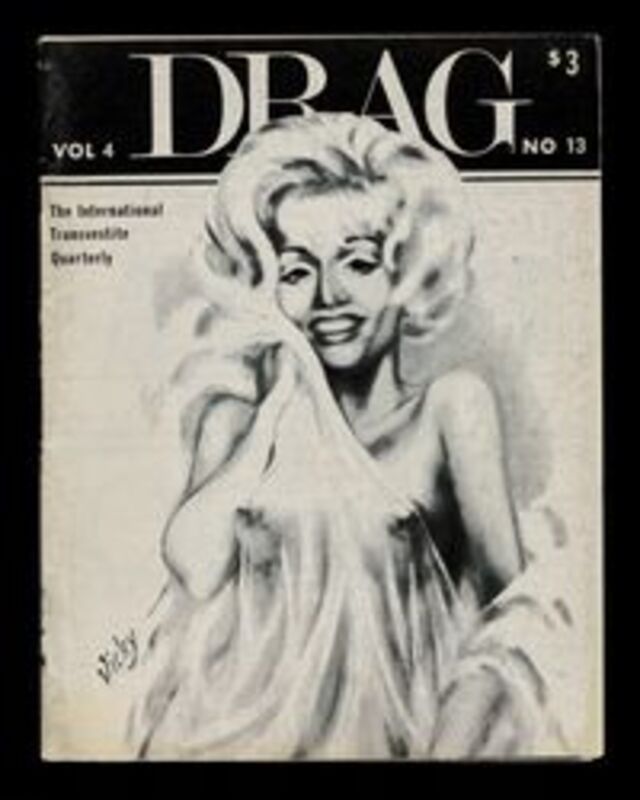
DRAG: The International Transvestite Quarterly
Brewster, Lee et al, Selected Copies from 1972-1975.
DRAG: The International Transvestite Quarterly was published starting in 1971 by Mardi Gras Enterprises, Inc., Founded and edited by Lee Brewster, an early transgender rights activist, drag queen, and early founder of the first U.S Pride. It was intended to speak for the issues of transvestites, a group often overlooked and marginalized by parts of the LGBTQ+ community, then and now. It was also affiliated with the pre-Stonewall gay activist group “Queens Liberation Front,” which Brewer founded in 1969. DRAG magazine offers a valuable insight into the lives of early transgender people.
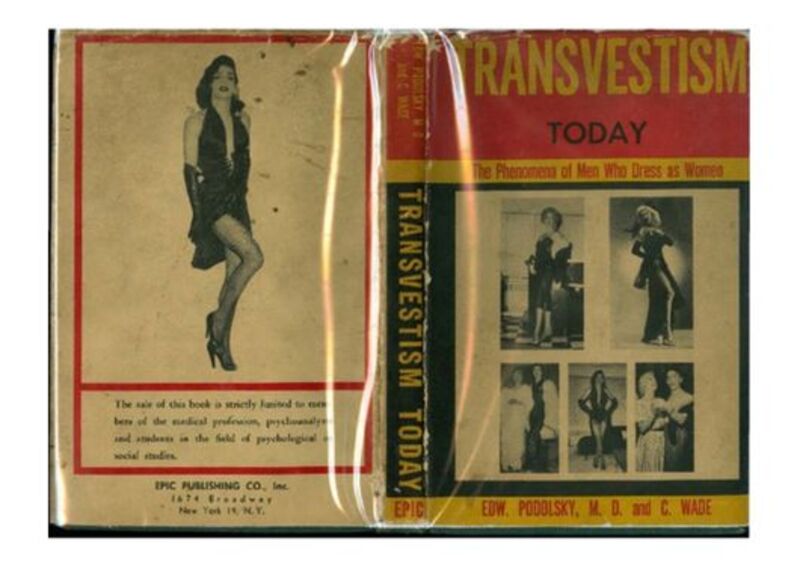
Transvestism Today: The Phenomena of Men Who Dress as Women
Edward Podolsky and Carlson Wade, 1960
Written by Edward Podolsky and Carlson Wade, this volume attempts to define transvestism for the medical community, and its sale was prohibited to medical students, psychoanalysts, and students of the field, likely due to concerns regarding the “moral content” of the text.
The Transsexual Phenomenon
Harry Benjamin, 1966
The Transsexual Phenomenon is a medical textbook published by American endocrinologist and sexologist Harry Benjamin in 1966 with The Julian Press. The text is notable for its examination of transsexuality not as a psychological issue, but rather as a somatic disorder that should be treated through medicine.
When initially published, the book was met with a mixed reception, but it would later be known as the “transsexuals’ Bible”, a standard for trans care in the medical community. Benjamin and his work (and specifically this text) are credited with the popularization of the term transsexual in medicine. It has been heavily critiqued by scholars for perpetuating or creating many harmful stereotypes about trans people.
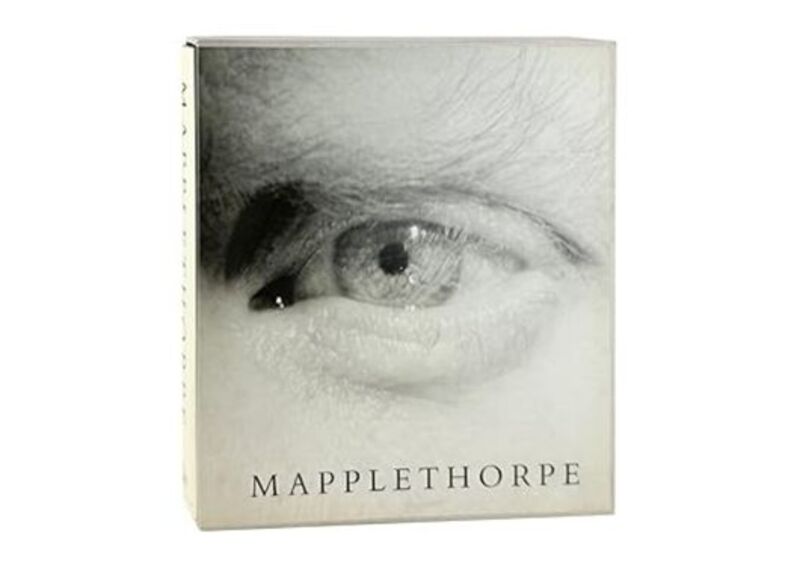
Mapplethorpe
Robert Mapplethorpe and Arthur Danto, 1992
The definitive collection of nearly three hundred duotone photographs chronicles the development of Mapplethorpe’s career, in a collection that includes his society portraits, nudes, floral still lifes, and explicit erotic images. This particular volume was previously displayed at the Burling Library, marking one of its most popular exhibits.